Cybersecurity
Cyber-security for Industry 4.0 and smart cities
A main driver for smart city development is Industry 4.0, in which ICT helps connect physical systems to the cyber-world, thereby enabling supply chain market more efficient, agile, and customer-focused. However, cyber-security risks become a key concern due to open systems with IP addresses, creating more avenues for cyber-attacks.
Information and communication technology (ICT) is expected to play an increasingly pivotal role in deepening economic integration and community building across the Association of Southeast Asian Nations (ASEAN), transitioning towards a digitally-enabled economy that is secure, sustainable, and transformative. This project considers the development of connected smart cities for a smart ASEAN society in general and in Vietnam in particular.
The project aims to provide tools to enhance cyber-security in Industry 4.0, contributing to the enhancement of information reliability for smart society.
Collaborative learning for attack detection
Collaborative / Federated learningEach node in the network, such as a blockchain full node or an IoT gateway, collects data and trains a model locally. Instead of sending raw data to a server, the nodes exchange only the learned knowledge (model weights). A central server aggregates them into a global model and sends it back to every node.
This way, the system leverages knowledge from the whole network without exposing private data or congesting the network with large transfers. On the task of detecting and classifying network-layer attacks, the model reaches up to 97.7% accuracy.

Detecting attacks in transactions & smart contracts
Attacks in transactions & smart contractsBlockchain is increasingly popular, yet its transactions and smart contracts themselves become attack targets. The threats span two layers: the network layer (meaningless transaction spam, brute-force passwords) and the transaction/smart-contract layer (exploiting vulnerabilities to steal assets or break the system's integrity).
Our group developed a detector based on collaborative learning, deployed directly on the mining nodes for real-time monitoring and identifying attacks on both layers, reaching up to 94% accuracy.

Vision-based cyberattack detection
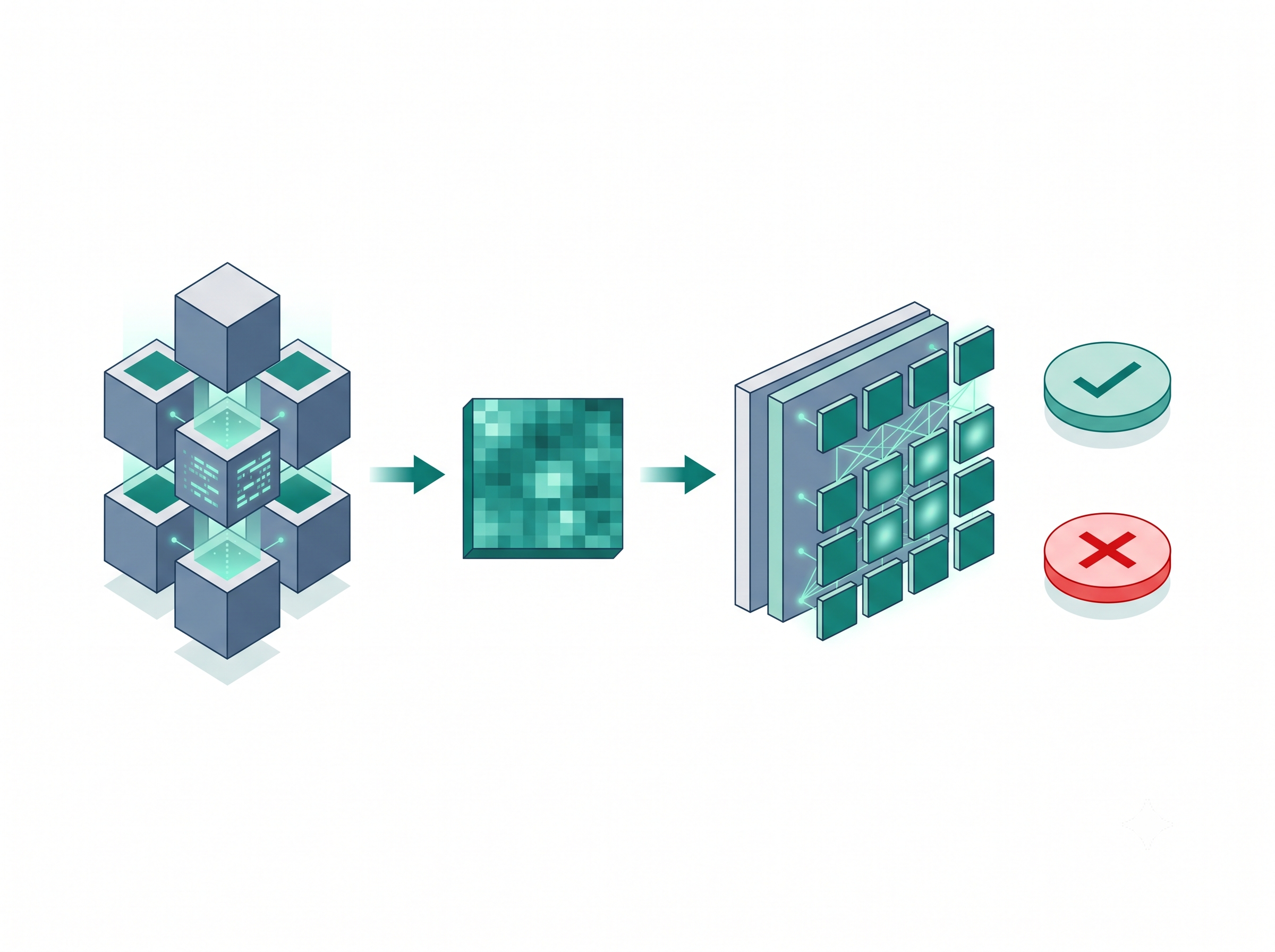
Vision-based learning · Vision TransformerA preprocessing tool based on natural language processing (NLP) converts transaction features, such as transaction value, gas used, and input length, into an image representation. This image is fed to a Vision Transformer (ViT), which is very strong at capturing complex patterns and semantic relationships.
Combining NLP with vision-based learning helps detect many types of attacks, reaching 99.5% accuracy while using only about 8% of the parameters of ResNet, i.e., light enough to deploy on resource-constrained nodes.
Semi-supervised anomaly detection with limited labeled data
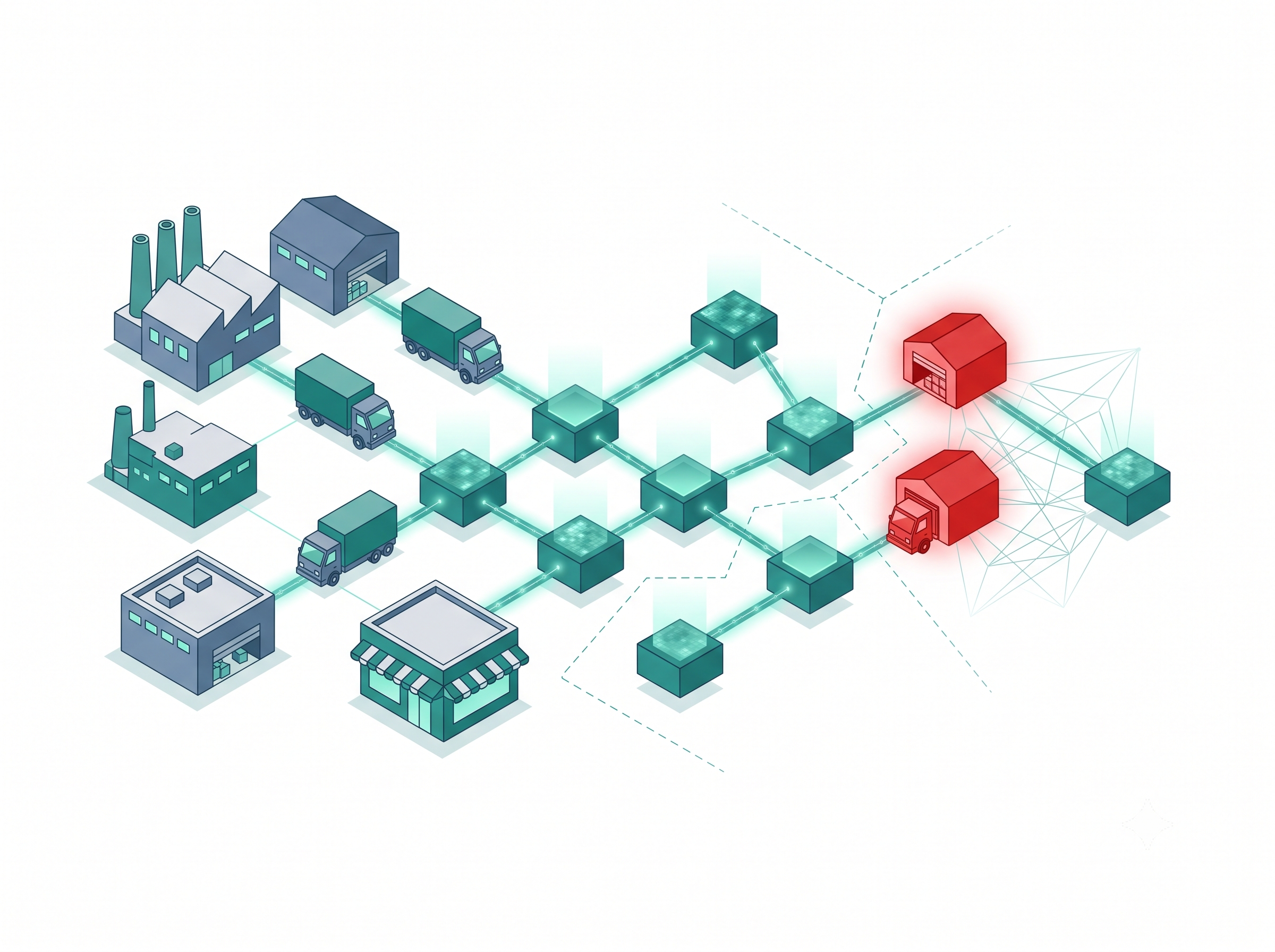
Semi-supervised anomaly detectionIn blockchain-based supply chains, anomalous data is usually rare and expensive to label. Semi-supervised learning exploits a small amount of labeled samples together with a large pool of unlabeled data to build a decision boundary, thereby flagging out-of-distribution behavior as anomalous.
Cyber risk assessment for Industry 4.0
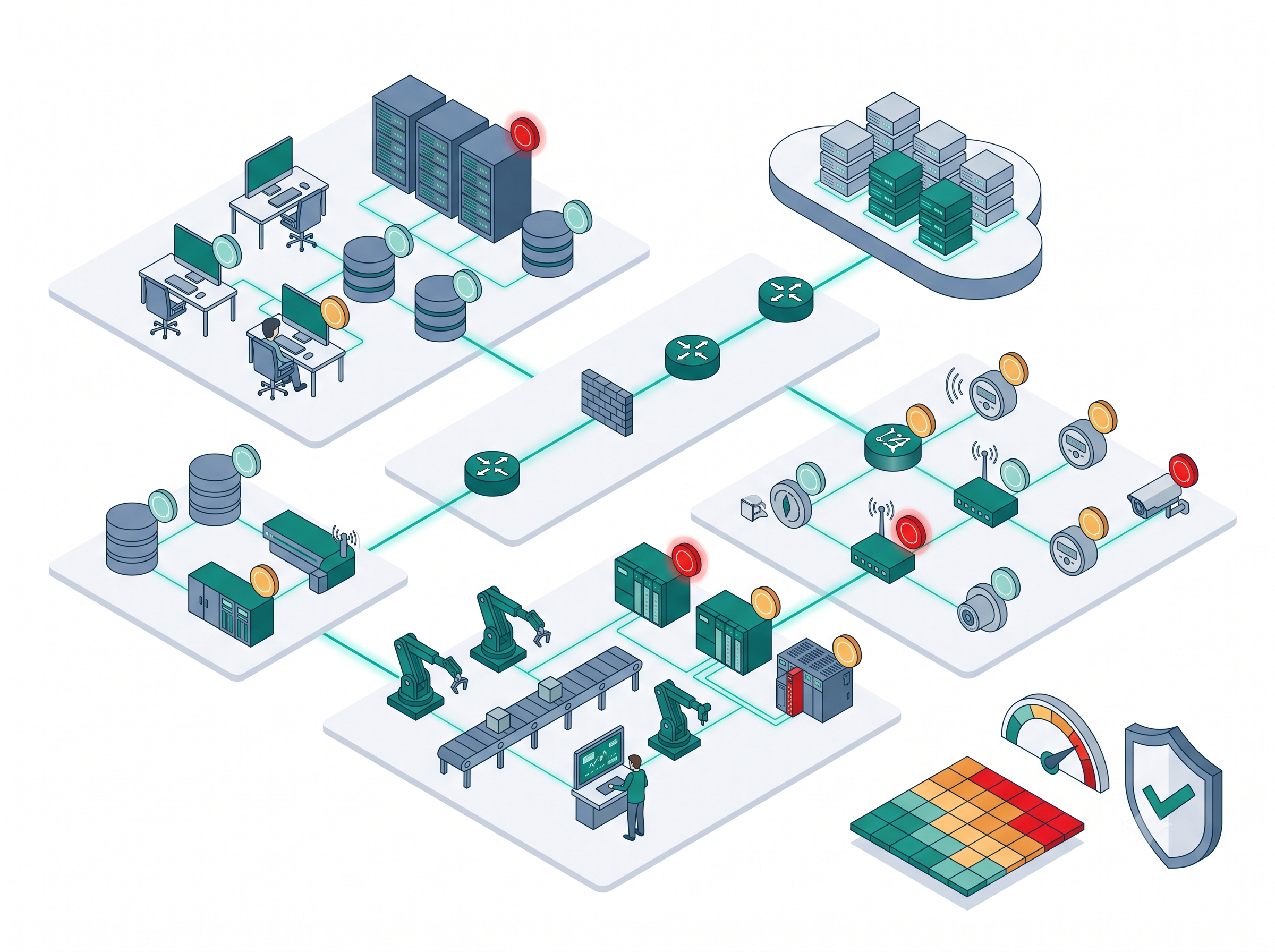
Cyber risk assessment frameworkWe builds a cyber-risk assessment framework for Industry 4.0 that helps identify and rank threats across connected systems, together with recommendations tailored to the Vietnamese context.
Deployed on real blockchain infrastructure
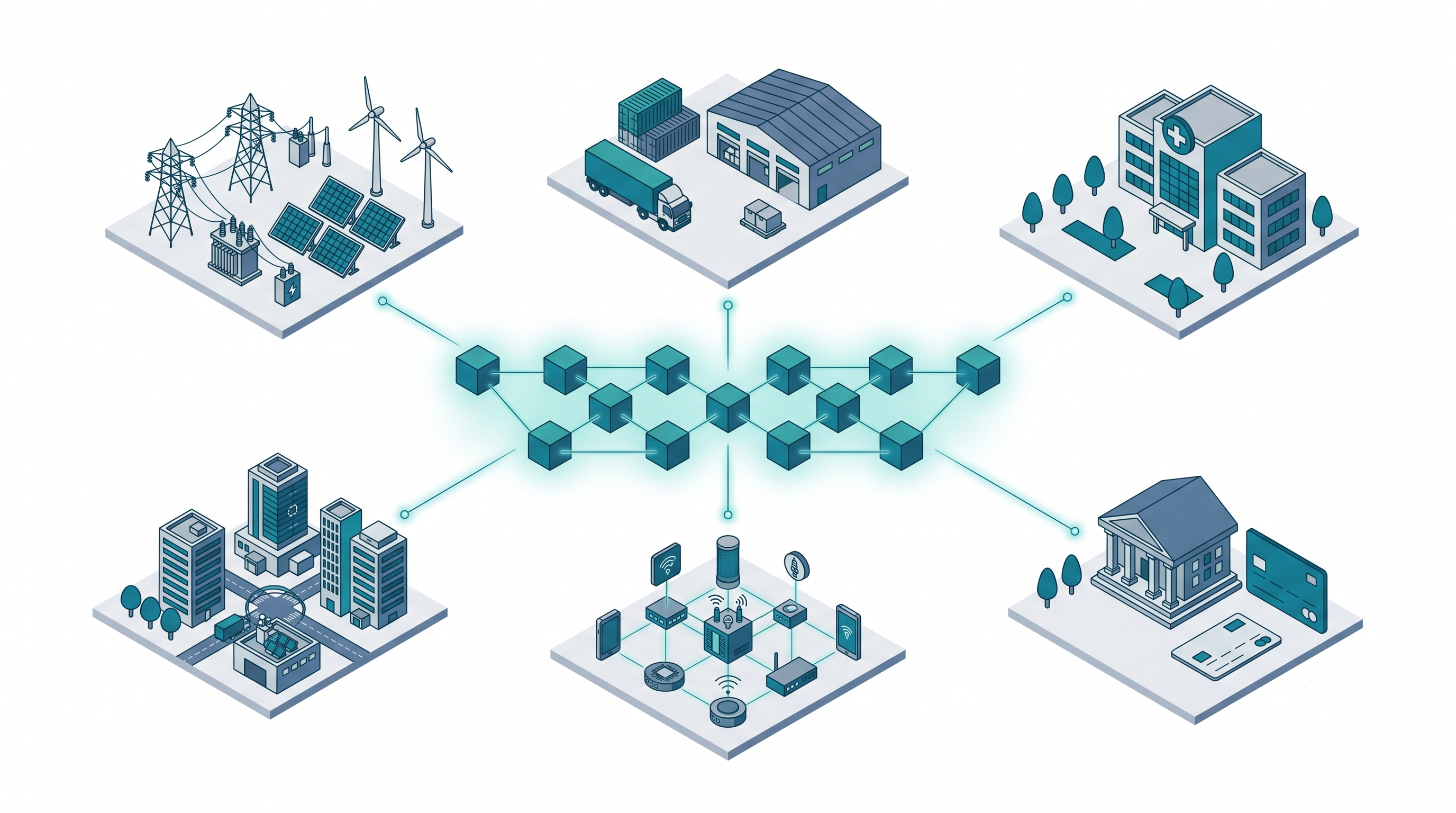
The solutions above have been deployed on real systems in our laboratory: a provenance-tracing system built on Ethereum infrastructure, a smart grid, and Industry 4.0 IoT networks.
Journals
- Tran Viet Khoa, Do Hai Son, Chi-Hieu Nguyen, Dinh Thai Hoang, Diep N. Nguyen, Tran Thi Thuy Quynh, Trong-Minh Hoang, Nguyen Viet Ha, Eryk Dutkiewicz, Mohammad Abu Alsheikh, and Nguyen Linh Trung. Collaborative learning framework to detect attacks in transactions and smart contracts. IEEE Transactions on Cognitive Communications and Networking, 12:4290 – 4306, November 2025.
- Tran Viet Khoa, Do Hai Son, Dinh Thai Hoang, Nguyen Linh Trung, Tran Thi Thuy Quynh, Nguyen Viet Ha, Diep N Nguyen, and Eryk Dutkiewicz. Collaborative learning for cyberattack detection in blockchain networks. IEEE Transactions on Systems, Man, Cybernetics: Systems, vol. 54, no 7, pages 3920-3933, July 2024.
- Bui Minh Tuan, Tran Viet Khoa, Do Hai Son, Nguyen Linh Trung, Tran Thi Thuy Quynh, Nguyen Viet Ha, Nguyen Ngoc Hoa, Nguyen Dai Tho, and Le Quang Minh. A new framework for cyber risk assessment for Industry 4.0 and recommendations for Vietnam. REV Journal on Electronics and Communications, 13(3–4):28–44, July–December 2023.
Conferences
- Do Hai Son, Le Vu Hieu, Tran Viet Khoa, Yibeltal F. Alem, Hoang Trong Minh, Tran Thi Thuy Quynh, Nguyen Viet Ha, and Nguyen Linh Trung. Vision-based learning for cyberattack detection in blockchain smart contracts and transactions. In 24th International Symposium on Communications and Information Technologies (ISCIT), Hanoi, Vietnam, 16-18 October 2025.
- Do Hai Son, Bui Duc Manh, Tran Viet Khoa, Nguyen Linh Trung, Dinh Thai Hoang, Hoang Trong Minh, Yibeltal Alem, and Le Quang Minh. Semi-supervised learning for anomaly detection in blockchain-based supply chains. In 2024 23rd International Symposium on Communications and Information Technologies (ISCIT), pages 140–145, 2024.
- Tran Viet Khoa, Do Hai Son, Dinh Thai Hoang, Nguyen Linh Trung, Tran Thi Thuy Quynh, Nguyen Viet Ha, Diep N Nguyen, and Eryk Dutkiewicz. Real-time cyberattack detection with collaborative learning for blockchain networks. In IEEE Wireless Communications and Networking Conference (WCNC), Dubai, United Arab Emirates, April 2024.
- Do Hai Son, Tran Thi Thuy Quynh, Tran Viet Khoa, Dinh Thai Hoang, Nguyen Linh Trung, Nguyen Viet Ha, Dusit Niyato, Diep N. Nguyen, and Eryk Dutkiewicz. An effective framework of private Ethereum blockchain network for smart grid. International Conference on Advanced Technologies for Communications (ATC), Ho Chi Minh city, Vietnam, 2021. [Best paper award]